
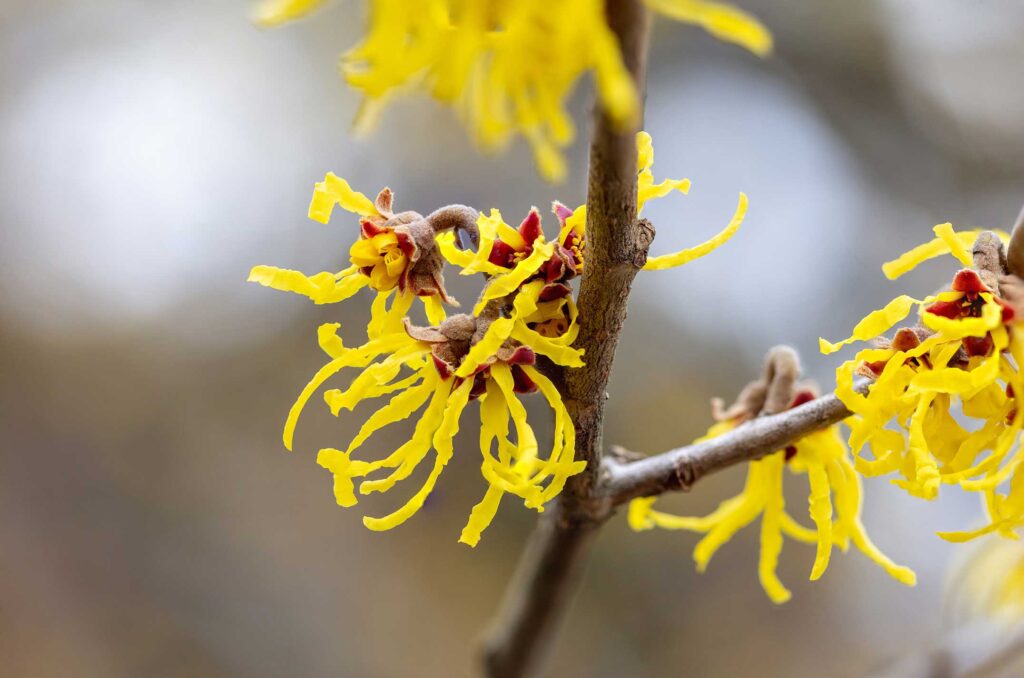
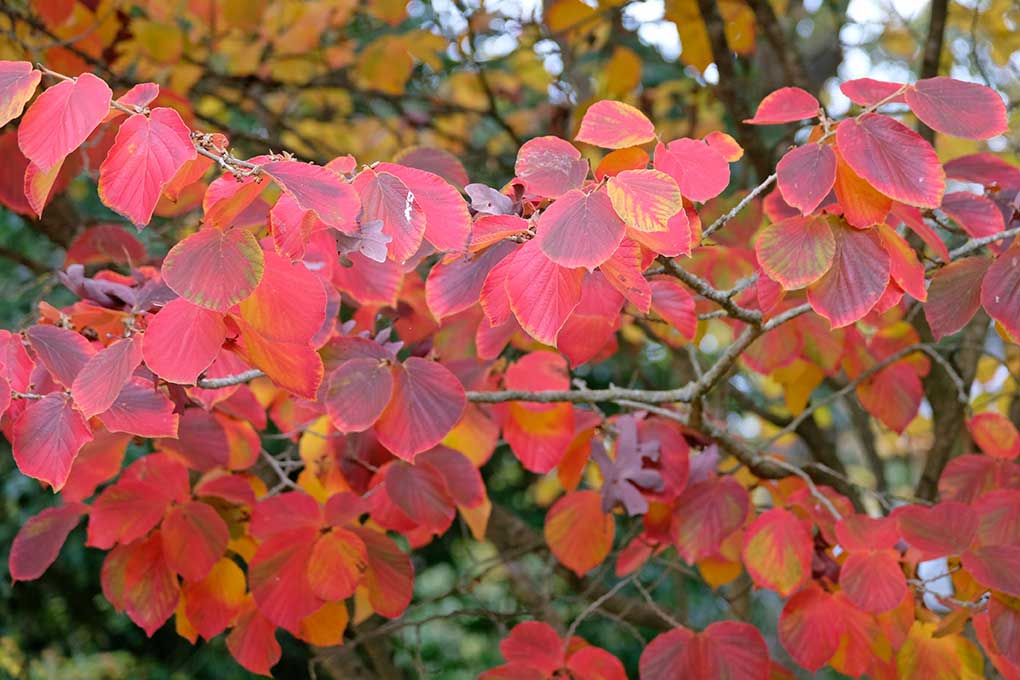
Common witch hazel (Hamamelis virginiana) is a unique, late-blooming shrub known for its striking, spidery yellow flowers that appear from late fall into early winter, as well as its amazing fall color. Beyond its aesthetic appeal, it offers significant benefits to local wildlife and a rich history as an herbal remedy and dowsing tool.
About Witch Hazel
Did you know that witch hazel was used to find water on land? Dowsing rods were cut from the common witch hazel tree and these were used to seek out sources of underground water. Other uses for witch hazel include making an astringent from the leaves and bark. You can purchase a bottle of witch hazel from your local drugstore today.
The blooming period is October through December and these flowers are hard to miss! With a range of subtle to bright yellow colors – the flowers are a colorful addition to a bare fall/winter landscape. If you look closely at the flowers, they resemble a sea creature with many legs – maybe an octopus or a squid. The flowers have a strong, fragrant smell.
Native Range and Growing Conditions
Common witch hazel is native to the northeastern and southeastern United States, where it grows in moist soil conditions in part-shade. It is hardy in USDA Zones 3 through 8.
Growing Requirements
- Soil: It grows best in moist, well-drained soil.
- Light: It thrives in partial shade but can tolerate full sun if moisture is adequate.
- Size: It typically grows into a large shrub or small tree, reaching heights of up to 15 feet
The Wildlife Value of Witch Hazel
Witch hazel provides crucial resources during a time of year when most other plants are dormant, making it a valuable addition to any habitat garden.
Witch hazel blooms from October through December, a unique time for flowering. The distinctive, ribbon-like yellow flowers attract specialized pollinators.
Food for Wildlife
The fruit and seeds of the witch hazel are eaten by small birds and squirrels. Northern bobwhites, wild turkeys, chickadees, titmice, cardinals, grosbeaks, and other birds feed on the seeds or eat the insects found on this plant. White-tailed deer and beaver will feed on the leaves and branches, while rabbits and squirrels eat the fruit and seeds.
Witch hazel is the host plant for the larvae of nearly 70 moths and butterflies, including the witch hazel dagger moth (Acronicta hamamelis) (Source: NC Extension), the spring azure butterfly, lace-border moths, tussock moths, and leaffolder moths.
How to Include Witch Hazel in Your Garden Landscape
| Landscape Feature | Benefit | Planting Tip |
|---|---|---|
| Winter Interest | Its fragrant, ribbon-like yellow flowers provide color and scent to a bare landscape from October to December. | Place near an entryway, patio, or path where the blooms and fragrance can be appreciated up close in late fall/early winter. |
| Fall Color | The leaves turn a striking gold/orange color before dropping, adding beautiful color to the autumn garden. | Use it as a specimen plant or anchor in a woodland edge setting where its fall foliage can be showcased. |
| Screen | Its mature size (up to 15 feet) makes it an excellent choice for a natural screen or border in a moist area. | Plant in masses to create a privacy barrier, especially useful at the edge of a wet area or woodland. |