
Drive down a rural dirt road or along an old fence line, and you will almost certainly spot the familiar silhouette of an eastern red cedar. For generations, these trees have anchored field edges, stabilized soils, and even supplied rot-resistant fence posts. More importantly, eastern red cedar (Juniperus virginiana) plays a critical ecological role for wildlife across much of the United States.
These native trees are hardy plants. They can take the heat, drought, cold, wind, and even a little salt spray. Tough, adaptable, and highly valuable to animals, this native evergreen deserves a closer look.
Native Range of Eastern Red Cedar
Eastern red cedar is native to much of North America (about 37 states in the U.S.), making it one of the most widely distributed conifers in the eastern and central United States. Its native range extends:
- From southern Canada south through Florida
- West to Texas, Oklahoma, and the Great Plains
- Throughout the Midwest, Southeast, and Mid-Atlantic regions
It naturally occurs in old fields, prairies, woodland edges, limestone glades, fence rows, and disturbed sites, often acting as a pioneer species that colonizes open land. Because it tolerates poor soils and harsh conditions, eastern red cedar frequently establishes itself where other trees cannot.
Wildlife Value of the Eastern Red Cedar
Eastern Red Cedar is a Reliable Food Source
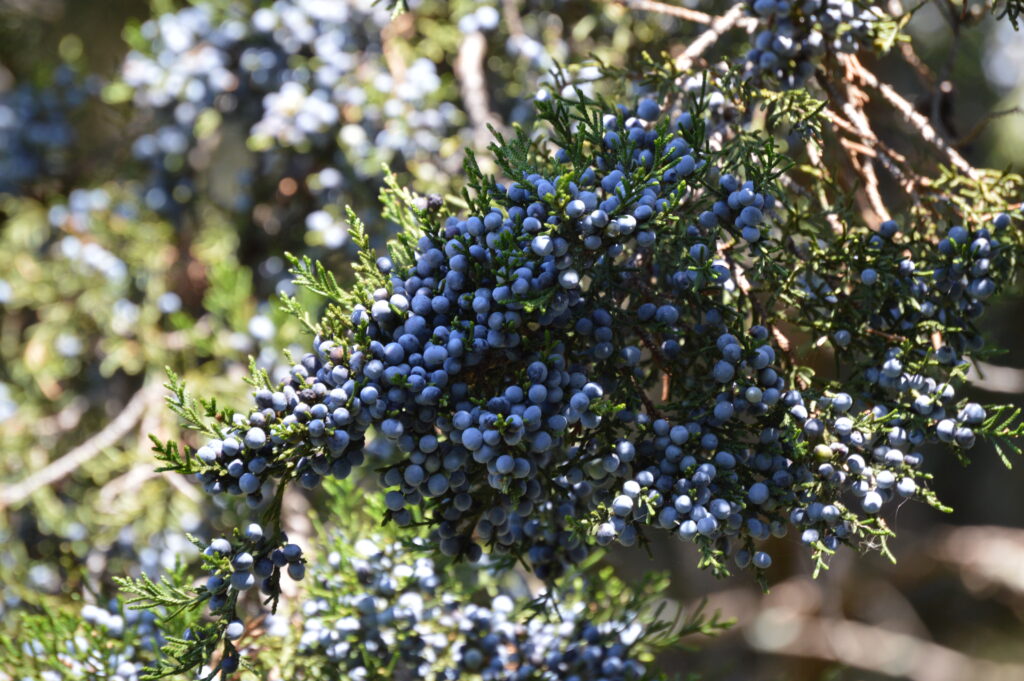
In the late summer through fall, these cedars will produce tiny pale silver-blue berry-like cones. (While these look like berries, they’re actually cones!) There are often so many tiny fruits on the tree that the branches will bend down under their weight. These fruits persist into winter, providing a critical food source when other options are scarce.
Have you ever looked up into the boughs of an eastern red cedar in the early fall? It is alive with birds. Robins, mockingbirds, cedar waxwings, juncos, and other smaller birds will be feasting on the abundant fruits of this tree. Bobwhite quail and wild turkeys also feed on the cones.
Other wildlife also feed on the fruit and leaves of the eastern red cedar, including white-tailed deer, raccoons, opossums, coyotes, skunks, foxes, and rabbits.
It Provides Cover and Shelter For Wildlife
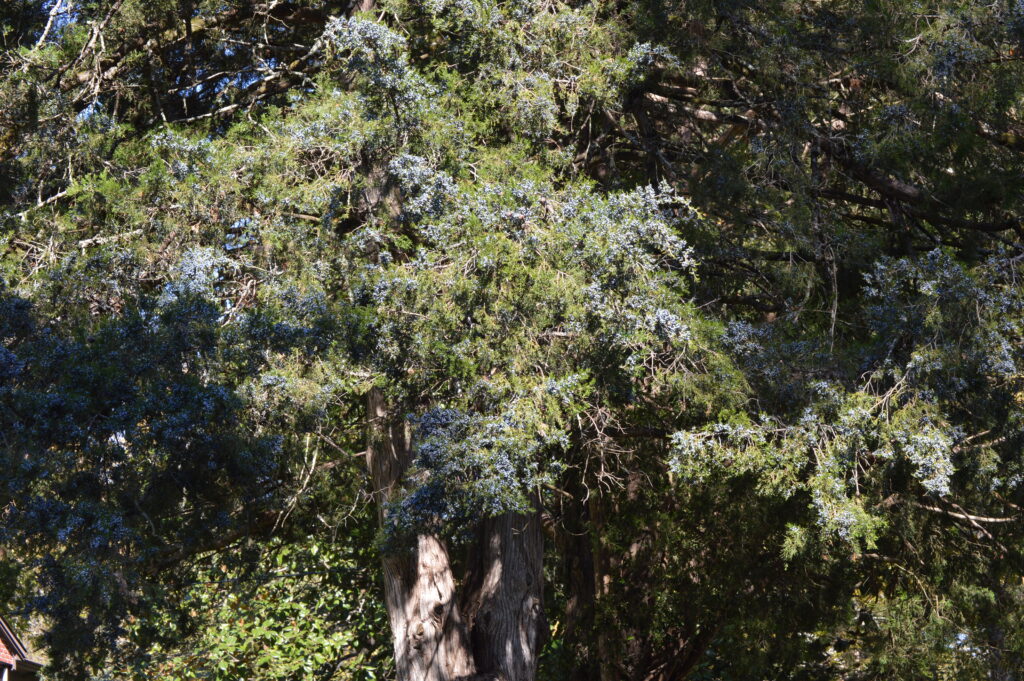
These cedars provide thick cover for wildlife, too, especially when several trees are growing together. Birds, large mammals, and small mammals will all seek shelter underneath or in an eastern red cedar. If you search at the base of one of these trees, you might find a rabbit or even a fawn taking cover. This shelter function is especially important in agricultural and open landscapes.

Many Birds Nest in Eastern Red Cedars
Many bird species use the branches of the eastern red cedar for nesting sites. Wild turkeys, northern cardinals, warblers, Cooper’s hawks, and mourning doves have all been observed nesting in these trees. Evergreen cover offers concealment from predators and protection from the weather during the breeding season.
It’s a Host Plant for Butterflies and Moths
The eastern red cedar is a host plant for several butterfly and moth species. The Juniper hairstreak (Callophrys gryneus) is one butterfly species that lays its eggs on this tree. This caterpillar feeds exclusively on juniper species.
Growing Conditions and Habitat Preferences
Eastern red cedar is exceptionally hardy and adaptable.
Light Requirements
- Prefers full sun, but will tolerate partial shade
- Best fruit production occurs in sunny locations
Soil Tolerance
- Thrives in well-drained soils
- Grows in clay, sandy, rocky, or limestone soils
- Tolerates poor, nutrient-deficient soils
- Does not tolerate prolonged flooding or poorly drained sites
Moisture Requirements
- Highly drought tolerant once established
- Moderate water needs during establishment
Hardiness
- Extremely tolerant of heat, cold, wind, and drought
- Hardy in USDA Zones 2–9
- Can tolerate light salt spray, making it useful near roads or coastal areas
Because of this resilience, eastern red cedar often spreads naturally into abandoned fields and open grasslands.

How to Grow Eastern Red Cedar
Eastern red cedar is low-maintenance and easy to establish.
Planting Instructions
- Plant container-grown or bare-root trees in early spring or fall
- Choose a sunny site with good drainage
- Space trees 10–20 feet apart, depending on desired density
Water Requirements
- Water regularly during the first growing season
- Once established, supplemental watering is rarely needed
How to Maintain Your Eastern Red Cedar
- Minimal pruning required
- Prune only to remove dead or damaged branches
- Avoid heavy fertilization; it prefers lean soils
Eastern red cedar works well in windbreaks, wildlife plantings, naturalized areas, and erosion-control projects.
How to Propagate Eastern Red Cedar
Eastern red cedar can be propagated by seed or cuttings.
Propagation by Seed
- Collect ripe blue cones in late fall or winter
- Remove pulp and clean seeds
- Seeds require cold stratification (3–4 months) to germinate
- Sow outdoors in fall or stratify in a refrigerator before spring planting
- Germination can be slow and uneven
Propagation by Cuttings
- Take semi-hardwood cuttings in late summer or early fall
- Use rooting hormone for best success
- Place cuttings in a well-drained propagation medium
- Rooting can take several months
Seed propagation is most common for restoration projects, while cuttings are useful for maintaining specific plant characteristics.
A Native Tree Worth Noticing
Eastern red cedar is often overlooked or misunderstood, but its wildlife value is undeniable. It provides food, shelter, nesting sites, and host habitat throughout the year, thriving in conditions that challenge many other trees.
The next time you pass an eastern red cedar, pause and look closely. See if you can find an insect, bird, or mammal that might be using it for food, cover, or nesting. What appears to be a simple evergreen may be supporting an entire web of life—hidden in plain sight.