
I remember the first time one of my orchids dropped its last bloom, and the tall, elegant flower spike turned brown and brittle. One day, my orchid had lots of flowers, and then, suddenly, it was bare. It felt like something had gone wrong overnight.
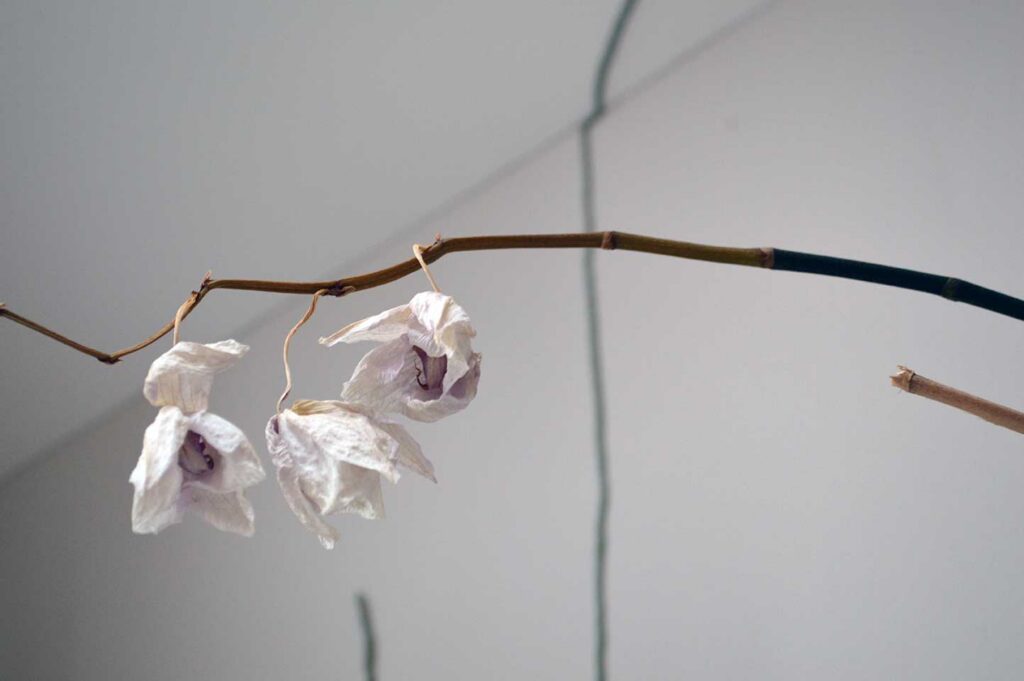
But here’s what I’ve learned after growing orchids alongside everything from perennials to backyard vegetables: what looks like decline is often just part of the plant’s natural rhythm.
Orchids, especially the Phalaenopsis type you see everywhere in grocery stores and garden centers, don’t bloom year-round. They put on a fantastic show for several weeks or months, and then, much like perennials that die back in the fall, they shift gears and rest.
Seeing the flowers fall off one by one and the spikes dry up? That’s usually just your orchid wrapping up one chapter before it slowly begins another.
How to Tell If Your Orchid Is Still Alive
So how can you tell whether your orchid is resting or actually in trouble?

Look at the leaves first.
Firm, green, shiny leaves are a great sign that your orchid is holding its own. The green leaves are still photosynthesizing.
If the leaves seem wrinkled, limp, yellowed, or faded, the plant could be stressed. However, you can bring it back, even if the leaves aren’t looking so good. A common cause of orchid death is overwatering. So, let’s check the roots for that.
Inspect the roots.
Orchid roots are a bit temperamental. They are silver-tinted or green and plump when healthy; they shrink back and shrivel up when thirsty; and rot when overwatered.
Gently remove the plant from its pot to inspect the roots. If you see firm, light-colored roots, that’s a good sign.
Brown, mushy roots or roots that are dry and hollow tell you there’s work to do, but not necessarily the end of the road. Even if you find some damaged roots, orchids can often recover with a root trimming and fresh orchid bark.


Don’t forget to check the crown.
The crown is the center part of the orchid where the leaves emerge. If it’s firm and not gooey, that’s another tick in the “still alive” column.
What Should I Do About the Dry Stem?
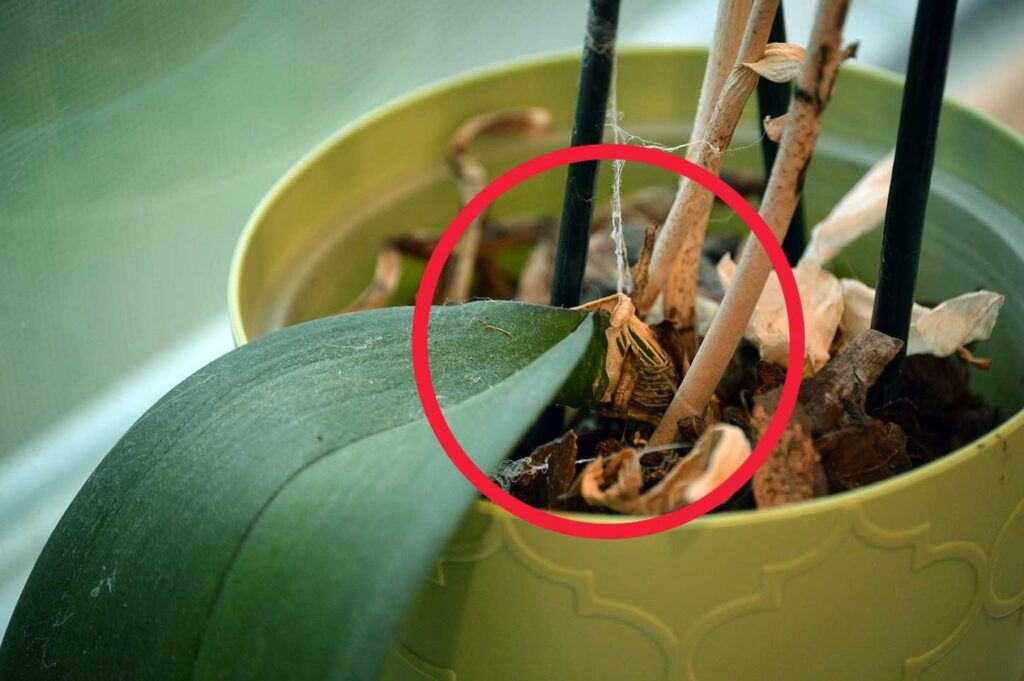
So that flower spike turned brown and crispy, now what?
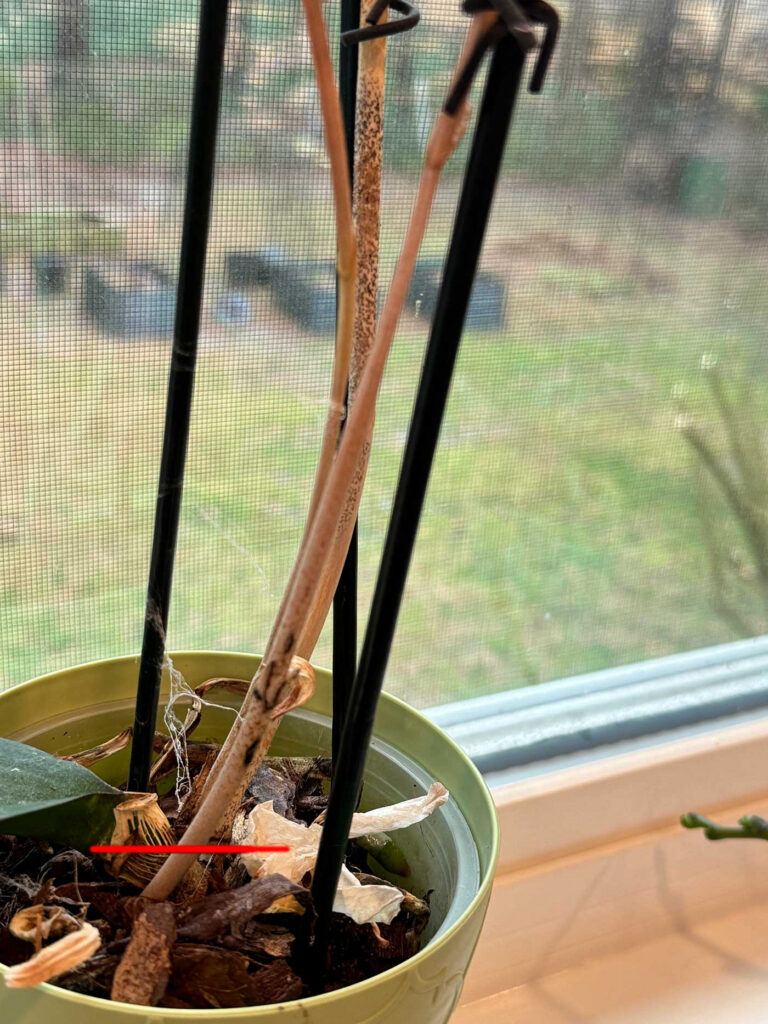
If the stem is fully dry and papery, trim it off near the base with clean scissors (to clean your scissors or snippers, wipe them with a rag dipped in 70% isopropyl alcohol or use an alcohol wipe, rinse them, then dry them). This helps the plant focus on new growth rather than clinging to an old spike.
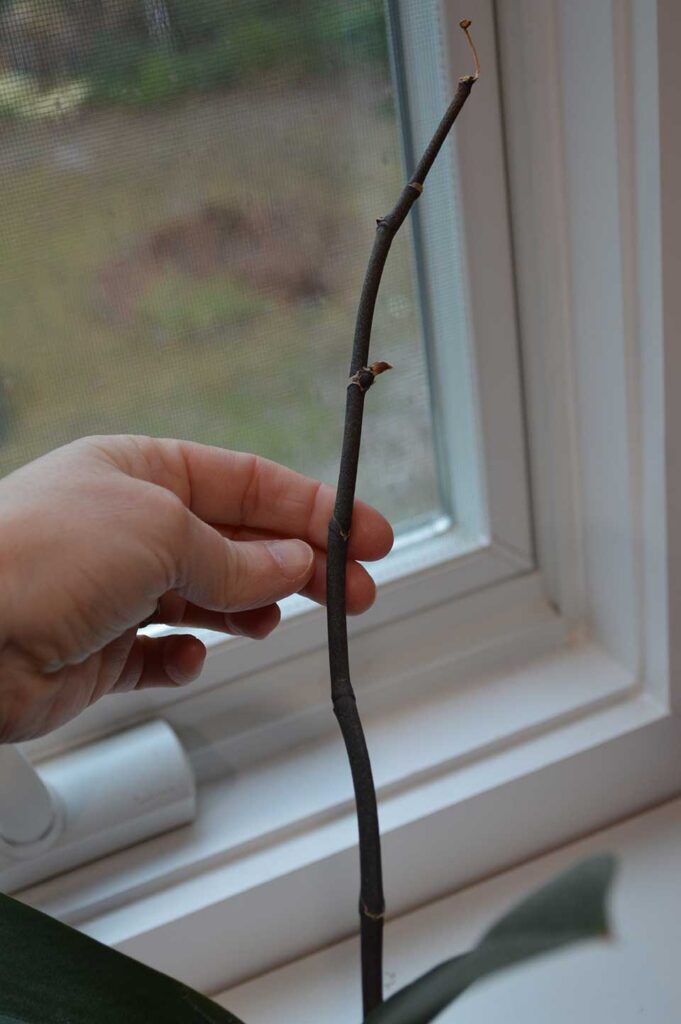
Is it still a bit green? You can leave it. Sometimes, orchids will surprise you with a secondary bloom from a node along that same stem.
What To Do While Your Orchid is Resting
After blooming, orchids enter a quieter season. This is a rest phase where they rebuild strength. Think of it like the plant’s off-season training.
Here’s what to do now:
- Place your orchid in a window withbright, indirect light. Make sure it doesn’t receive any harsh, direct afternoon sun.
- Water it sparingly about every 7–10 days.
- Never let the pot sit in water. Without good drainage, the roots of your orchid will rot.
- Feed your orchid lightly once a month with a balanced orchid fertilizer to keep nutrients flowing.
This steady care gives your orchid what it needs to thrive and maybe even rebloom.
Will My Orchid Bloom Again?
Typically, yes, it will rebloom. Truthfully, with orchids, it’s all about finding that perfect lighting. Once you find that, you can get blooms and reblooms with almost no effort.
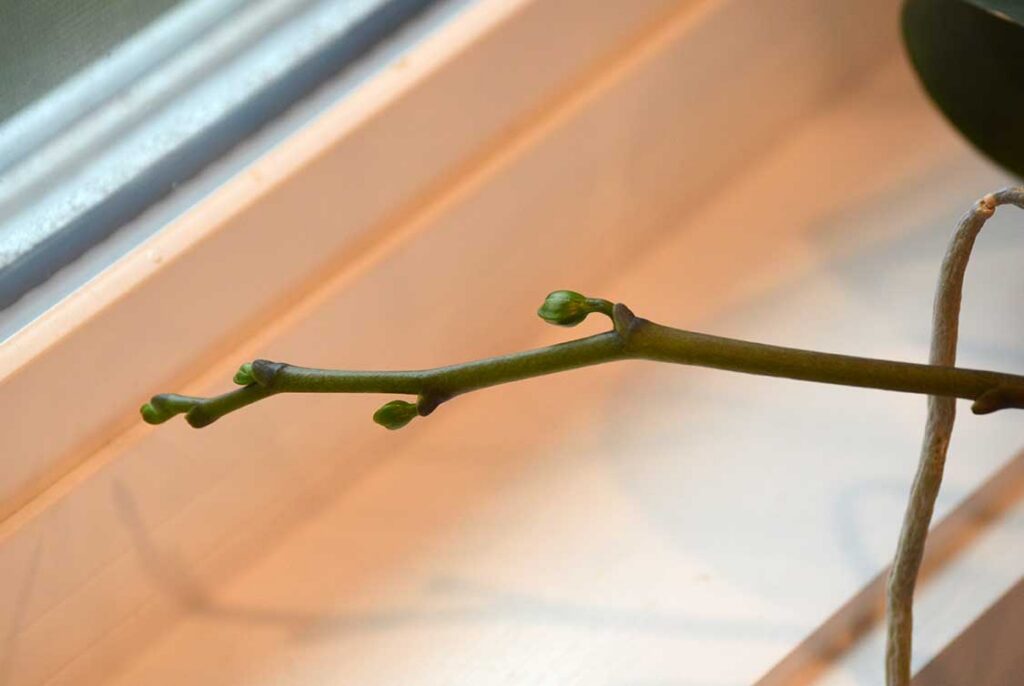
Many orchids rebloom once or twice a year with proper care. I have two that hang on the wall. This spot receives ideal lighting conditions in winter, so that is when my orchids start blooming. The blooms last for months and happen every year.
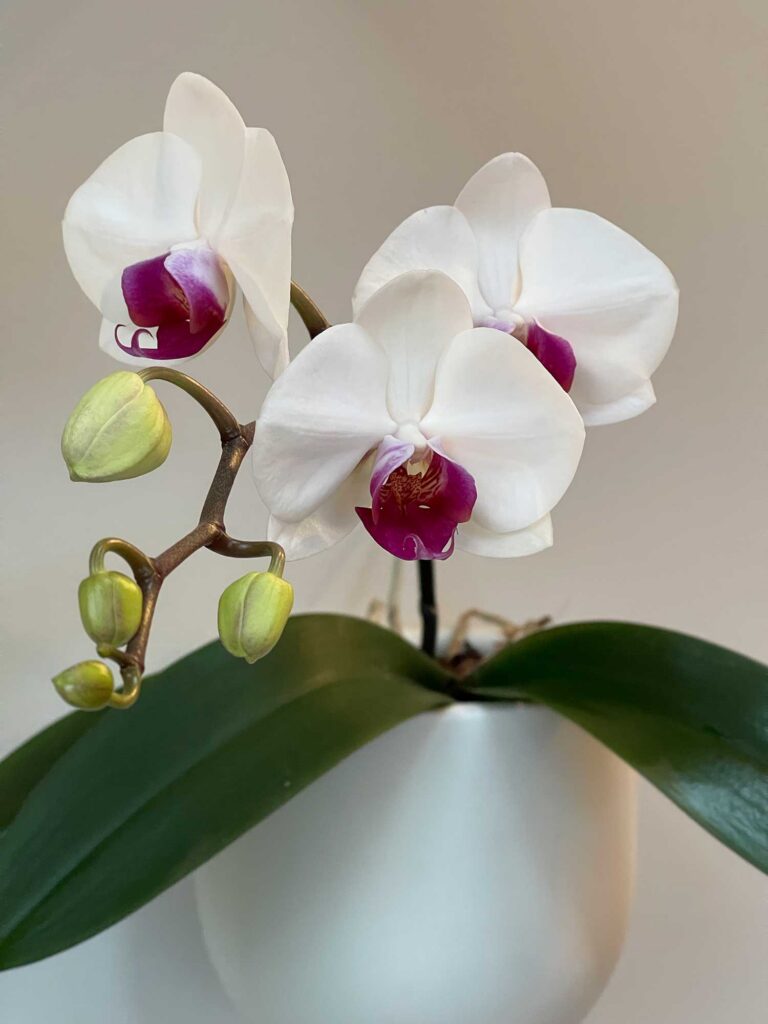

Just like the critters and plants I write about in the garden, orchids have their own rhythms and quirky ways of showing life, even when they’re not putting on a show.
And sometimes, the hardest part of growing them is simply learning to wait.
